

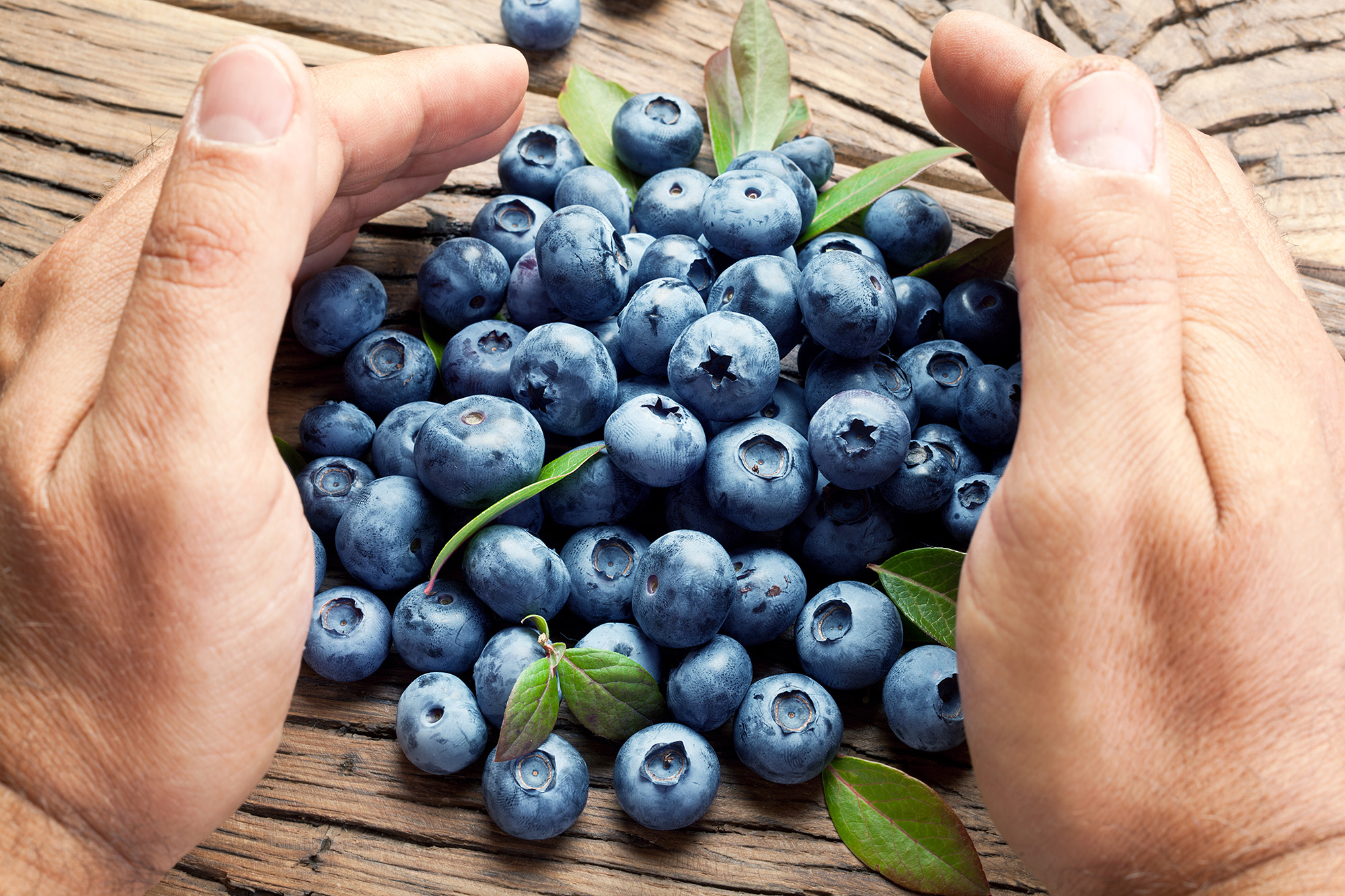
Ecuador blueberries are reaching the market at just the right time
Ecuador lies on the equator, which allows blueberry growers to harvest in any week of the year, a flexibility few competitors can offer. While local prices remain high and exports are modest, the sector is aiming for substantial expansion. That growth, however, depends mainly on one factor: investment.
The Federation of Blueberry Producers and Exporters (Fepexa) was established to promote blueberry production in line with high standards of quality and sustainability, to link growers with the government and to increase export volumes. Its president, Diego Garzón, acknowledges that uniting growers is difficult. “Many growers want to go their own way, as is also the case in other crops such as bananas,” he says.
 Diego Garzón, president, and Sebastián Muñoz, general coordinator of Fepexa.
The federation has nevertheless held technical roundtables with the government and set up public-private coordination. It has also produced a cultivation guide. “The guide gives all Ecuadorian growers a common standard, so that quality is equal across the country,” Garzón explains.
A small sector with a strong domestic market
Ecuador has about 400 hectares of blueberries, roughly 300 of which belong to Fepexa members. The country counts about 30 growers. 70 to 75 percent of the blueberry production is sold locally. “Prices in Ecuador are currently excellent, and I expect them to hold for another year or two, until more growers start to export,” Garzón says. Current acreage fully serves local demand, and he estimates that the domestic market could absorb 400 to 500 hectares at most.
Cultivation in the Andes
Most plantings lie in the Andean provinces, and the main exporting growers are located in Loja and Tungurahua. Altitudes average about 2,600 metres and reach 3,000 metres. “Growers choose the Andes for better fruit quality, more water and higher altitude,” Garzón says. The coast has far fewer plantings, as it lacks fresh water and its heat and moisture create humidity that attracts insects and disease. The Andes face less pest and disease pressure, which also facilitates organic production. The terrain is the drawback. “There is little flat land, and because sun and rain alternate, the crops must be covered.”

Garzón himself farms in Carchi, near the Colombian border, about three hours from Quito. “The land is higher and colder, which gives good flowering and fruit that travels well,” he says. About 95 percent of Ecuadorian growers use bags or pots instead of soil, which allows better phytosanitary control, more plants per hectare and higher yields. Rainfall in his area is about 1,000 mm a year, and covered cultivation keeps production going through the rainy season from November to February.
The advantage of the equator
The intense solar radiation on the equator gives the fruit high natural sweetness. Because the climate is stable all year, growers can produce in all 52 weeks. “That is Ecuador’s big plus: we can decide which weeks to export,” Garzón says. This has attracted foreign companies such as the Sekoya group, since Ecuador can supply at times when other countries cannot. Water quality is high, labour costs are low at roughly $400 to $450 a month, and the logistics built for flowers, bananas and shrimp are already in place.

Varieties and timing
Growers cultivate varieties including Sekoya varieties, Eureka Sunrise, AtlasBlue, Rocío, Star, and Legacy. By dividing plots into two groups, they can stagger production. Most aim for a peak from March to May, when prices are best, because Peru concentrates on July to October. Output is lowest in December and January. “I try to produce all year round myself,” says Garzón. Peruvian competition is strongest around September, and Peruvian fruit sometimes even enters Ecuador when Peru has a surplus.
Markets and logistics
The United States is the largest market, followed by Spain, France, and Singapore. The rest goes to the Netherlands, Hong Kong, the United Arab Emirates, Italy, Germany, Malaysia, and Canada. Most fruit travels by sea and some by air. Large growers prefer the United States, where transit takes about 15 days, and prices are better. Garzón considers Europe a good destination for Andean fruit.

China is a new market. All phytosanitary protocols are complete, and only some government paperwork remains. “It remains to be seen how export patterns will change once China opens,” Garzón says. Fruit sent there arrived “really fresh”. Growers can supply certifications including GlobalGAP and Rainforest Alliance, and some are working towards USDA Organic.
Growth depends on investment
Fruit shown at Fruit Logistica in Germany drew praise for its size, sweetness and variety quality. Garzón sees one risk: “Because of the radiation, fertilisation must be managed carefully to prevent the fruit from becoming too sweet.” He claims Ecuadorian fruit is crunchier, sweeter and larger than Peruvian fruit. However, Ecuador does not intend to rival Peru’s 30,000 hectares.
Fepexa targets 1,000 hectares within three to four years, and Garzón considers 5,000 to 6,000 hectares plausible in ten years. Financing is the main obstacle, as local loans carry interest of around 8 percent, whereas the sector hopes for foreign funding at 2 to 3 percent. “Ecuador has the land, the climate and the logistics. The only thing missing is investment,” he says. He is open to any type of investor.

He notes that the government now offers more support than previous ones. It helped open the Chinese market and promotes blueberries as a “superfood”. On stability, he says the country is becoming safer across sectors and expects it to grow more attractive within one or two years.
Sharing knowledge
Garzón has grown blueberries for almost 12 years and was one of three pioneers testing varieties. The sector only took off four to five years ago. He also works as a consultant for new growers and criticises those who guard their knowledge “like the secret recipe of Coca-Cola”. “If we want to grow bigger, knowledge needs to be shared,” he says. He does not mind if others grow more fruit than he does. “I want people around the world to enjoy good fruit and good health.”
Source: Hortidaily.com