

The silent blueberry revolution in Georgia: A unique integration model at the gates of Eurasia
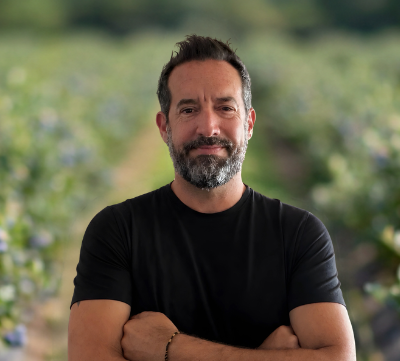
Mario Steta, president of the International Blueberry Organization (IBO), analyzes in depth his recent tour of the Caucasian country, highlighting its vertical technological leap, geopolitical advantages, and an associative culture that is breaking paradigms within Georgia and in global agriculture.
On the eastern borders of Europe, guarded by the imposing peaks of the Caucasus and bathed by the humid breezes of the Black Sea, the Republic of Georgia is leading one of the most vertical fruit and vegetable transformations in recent years. The country that saw the birth of viticulture eight millennia ago now seeks to register its name at the forefront of modern agri-food through a crop small in size but giant in value: the blueberry.
As part of the IBO’s strategy to be closer to its member countries and learn firsthand how the sector, its production, challenges, and opportunities operate, the president of the International Blueberry Organization (IBO), Mario Steta, conducted an official visit to the Eurasian country, invited by the Georgia Blueberry Growers Association (GBGA). This trip followed a similar visit that IBO Board member Steve Taylor had made to Ukraine a few days before.

During the visit, Steta had the opportunity not only to meet the entire board of the Association and visit production areas, but also met with government authorities such as the Minister of Environmental Protection and Agriculture of Georgia, David Songhulashvili.
“Our objective was to give strength to and recognize what the GBGA has structured since 2023, with an integration dynamic that is fundamentally centered on an obsessive focus on improving production and market positioning. Georgia is effectively beginning to or can become an important player internationally,” Steta comments.
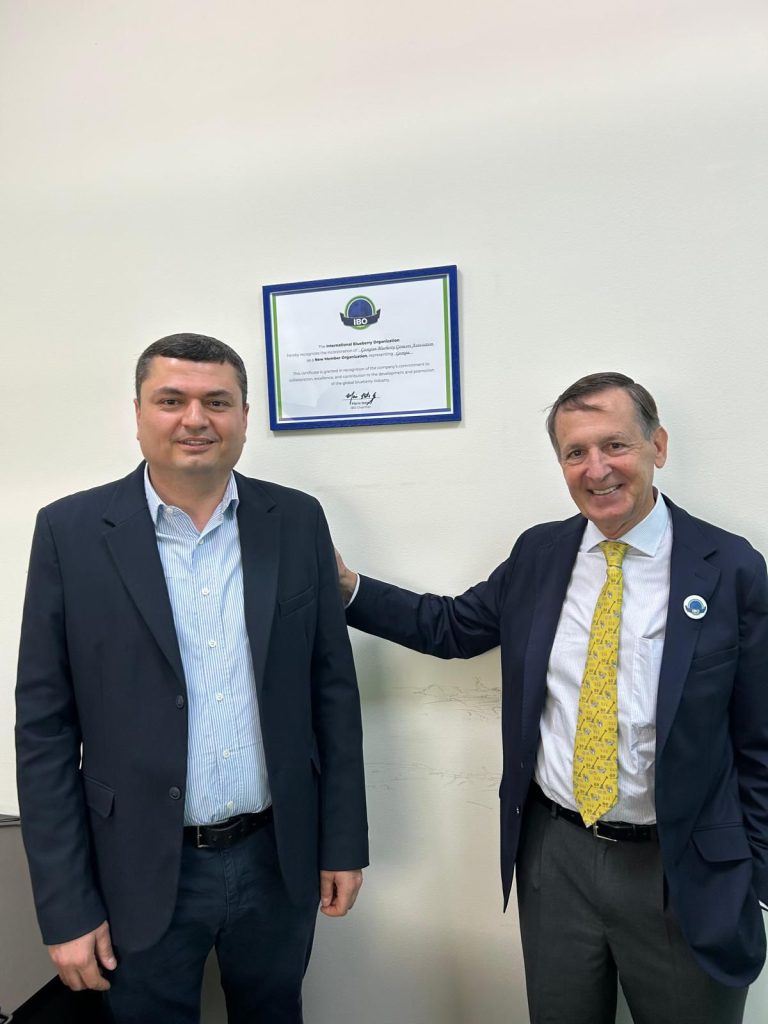
For Shota Tsukoshvili, CEO of the GBGA, Steta’s visit meant “a strong message of international recognition and trust.”
“Georgia is still a young and rapidly developing blueberry-producing country. When one of the most respected leaders of the global blueberry industry visits our farms, meets growers, and engages directly with the local association and public institutions, it sends a powerful signal throughout the sector — that Georgia matters, that our progress is being noticed, and that we are moving in the right direction”, said Tsukoshvili.
He also added “for the GBGA, this visit reinforced an important belief — that international cooperation and strong industry partnerships are essential for sustainable growth. We highly appreciate Mario Steta’s time, openness, and willingness to visit Georgia and support the sector. His visit gave growers confidence, international encouragement, and renewed belief that Georgia has the potential to become an increasingly important player in the global blueberry industry”.
In Search of Seasonality Expansion
Although Georgia is a relatively small country, with 3,000 hectares of blueberries in production, the growth plan is cautious but ambitious, aiming to reach 4,000 hectares with 25,000 to 30,000 tons by 2030.
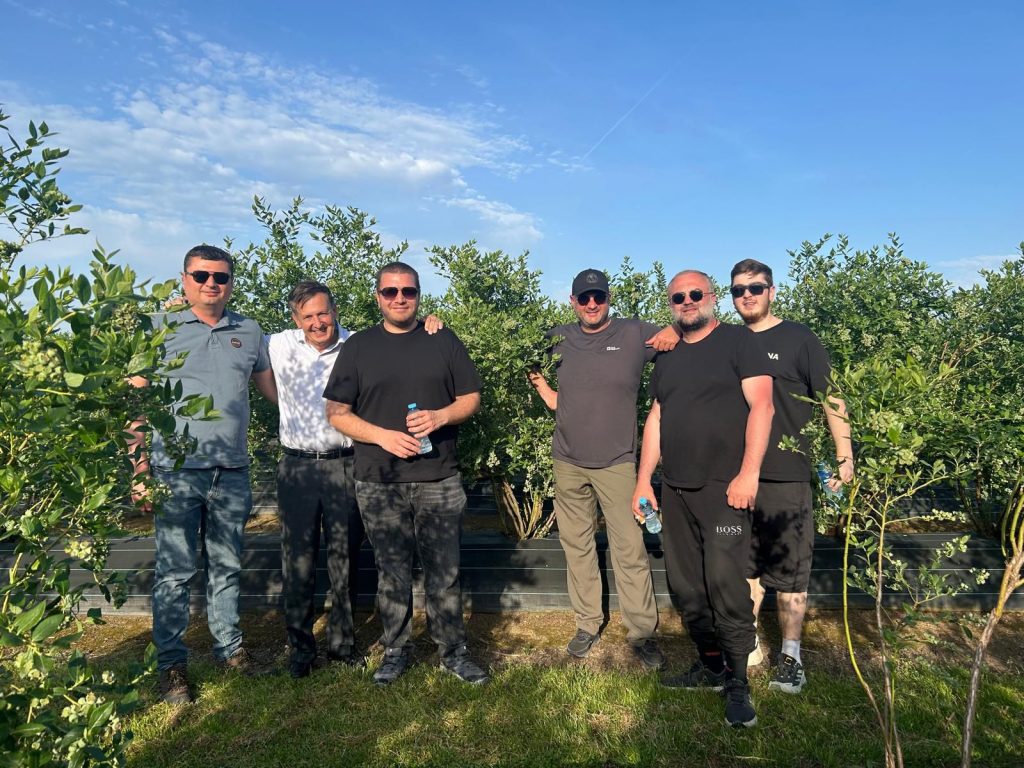
Likewise, he highlights that the different altitudes and climate conditions give them an interesting possibility to expand their seasonality.
“Today, seasonality is focused between June and July; starting at the end of May and finishing at the beginning of August, with the peak fundamentally concentrated in June and the first part of July. Yet it seems that the combination of altitude and environmental conditions, together with proper varieties and improvements on production technology, could allow production to be expanded to a period starting at the end of April or the beginning of May and going into September or perhaps even October.”
Furthermore, Steta points out that Georgia has woven a dense network of wide-ranging Free Trade Agreements (FTAs) that grant preferential access, with zero or reduced tariffs, to a potential market exceeding 2.5 billion consumers. This includes current agreements with the European Union, China, Turkey, the countries of the Commonwealth of Independent States (CIS), and the member states of the European Free Trade Association (EFTA).
Rapid Adoption of Advanced Genetics and Technological Packages
The Georgian industry quickly understood that competing with traditional varieties (such as the classic Legacy) in highly demanding markets would limit its long-term growth. Therefore, local producers are immersed in an aggressive varietal transition, massively introducing latest-generation patented genetic programs aimed at maximizing firmness, size, post-harvest life, flavor and yields. This renewal is complemented by the installation of macro-tunnels to modulate climate conditions, technified irrigation systems with high-precision moisture sensors, and optimized nutritional management.
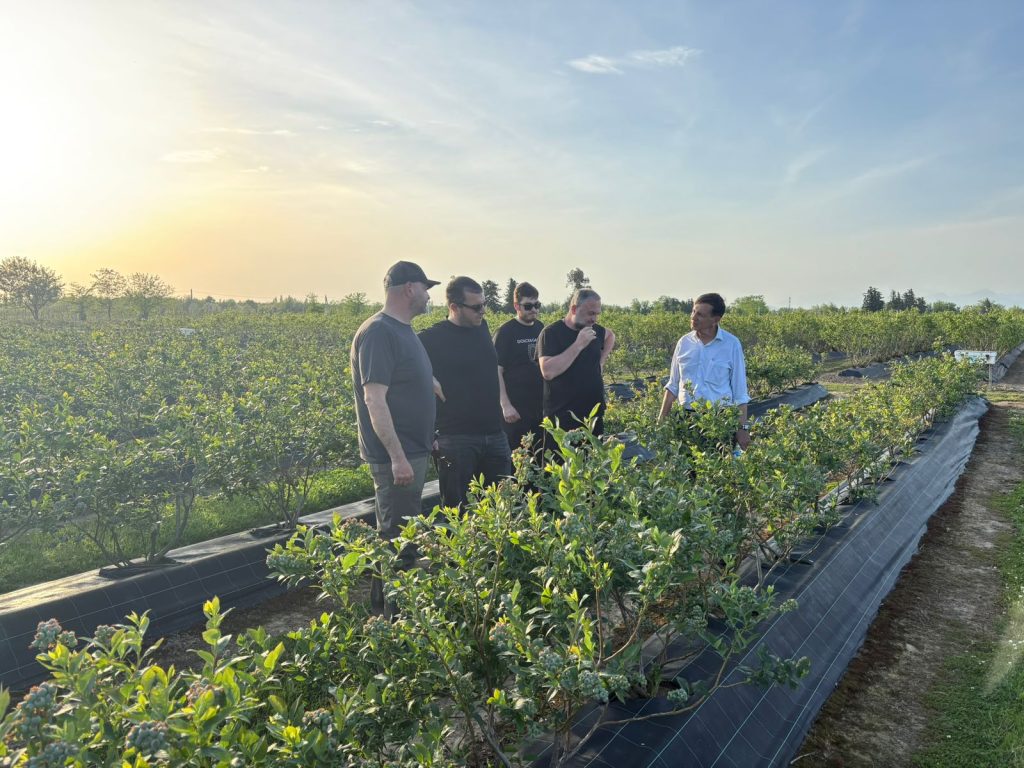
All of this has been sustained by a fundamental openness to bring in knowledge and expertise through world class consultants.
“Far from closing themselves off in local agricultural dogmas, the leaders of the Georgia Blueberry Growers Association have traveled the world to identify, hire, and attract the best global agronomic talent. The country has opened its doors wide to top-tier technical consultants from consolidated agro-exporting powerhouses in South America, such as Chile and Peru. This injection of international ‘know-how’ has allowed local producers to skip entire stages of trial-and-error learning, immediately adopting world-class orchard management practices,” says Steta.
The Human Factor: An Unprecedented Associative Model
Of all the surprises Georgia presented to the IBO delegation, the most impactful did not come from technology or geography, but from the ethical and organizational architecture of its growers’ association. Founded just three years ago, the Georgia Blueberry Growers Association has consolidated a culture of radical cooperation that breaks the traditional molds of agricultural competition. In a sector where technical and financial information is usually guarded with extreme jealousy as a commercial secret, Georgian producers, led by GBGA’s President, Tornike Phanjavidze, have opted for absolute transparency as the fastest way to guarantee national viability.
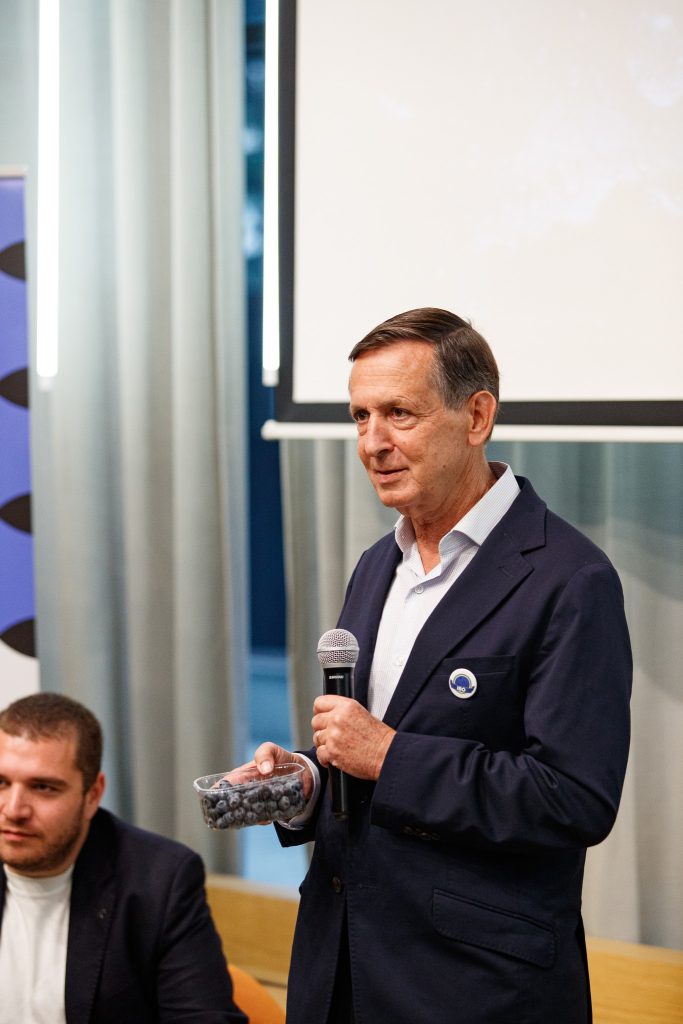 “The work they have carried out to structure an integration dynamic closely linked to the logic of improvement is incredible. There really is a very honest effort to share all opportunities for knowledge, building efficiencies, accessing inputs more affordably, and integrated promotion with all members. It goes far beyond what I have seen and what I know has been done in many places and organizations, including some of which I been part of. Here, the aim is: if I am the best producer, I don’t keep anything to myself so that others can learn from what I do and become better, elevating the whole industry,” comments Steta.
This democratization of knowledge is not limited exclusively to exchanging agronomic recipes or pruning management in the field. The true disruptive element lies in sharing the internal business structures of the associated companies.
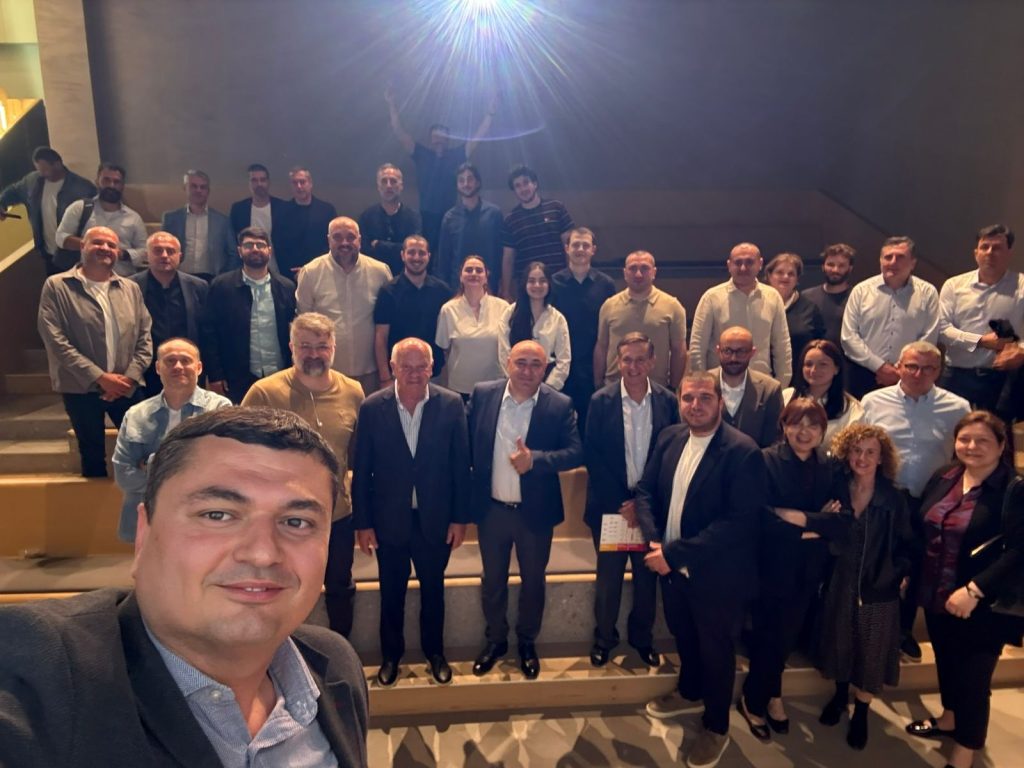
The partners openly share their financial data, operating costs per kilogram produced, purchase prices of critical inputs, and economic break-even points. This level of blind, collective trust generates a unique competitive advantage: it allows the industry to level upward in an accelerated manner, eliminating cost inefficiencies in smaller producers and consolidating an export offer that is homogeneous in quality and price.
This unique approach to integration by the GBGA is being noticed and recognized by other horticultural producers and agribusinesses, and certainly by the Government, in what could become a model to be replicated.
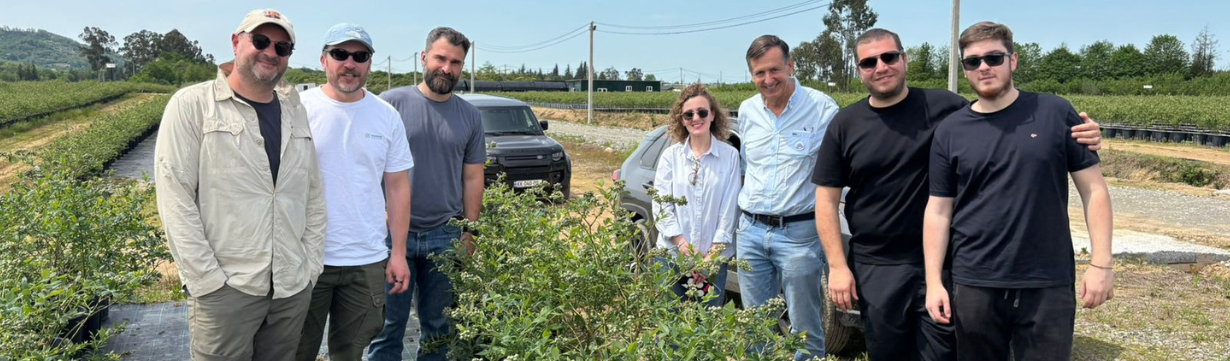
Mario Steta’s journey included visits through the main growing areas located in the west of the nation, a region characterized by different soil types, some of them fairly challenging, widely available water access mostly of excellent quality, and competitive weather conditions.
The observed panorama evidenced an industry that has paid its dues, but has managed to capitalize on every blow. In the early years of production in the Caucasus, serious errors were made due to inexperience: massive imports of low-quality plant material from non-certified European nurseries, the establishment of varieties with zero adaptation to local chilling hours, and critical failures in soil preparation that caused massive plant mortality during the establishment process.
“It was very interesting because we were able to see diversity on farming capabilities and performance in a balanced and transparent manner. I had the opportunity to visit three fields in the west of the country, being able to see and recognize where they had started, some of the mistakes they made, and how, in a highly accelerated way, they are truly being able to change the dynamic of what they did and where they need to go now. I saw plantations where the errors were present and were perceived simply and plainly in the yields with varieties not adapted to the area, plants that lacked physical strength, and fields that died upon establishment. They had to live with the repercussions of what that implies. But seeing the other extreme was fascinating.”
The “other extreme” to which Steta refers far exceeded expectations. Second-generation orchards, those designed under the new technological and genetic paradigm, are yielding astonishing productivities that challenge traditional standards for Highbush type blueberries in temperate climates.
“I had no idea that Georgia had the potential to record yields that have absolutely nothing to envy from some of the most prominent productions in climates like those of Peru or the south,” the organization’s president enthusiastically confesses. “They have some varieties with young plants that are already yielding six kilograms of fruit per plant. For regions with that type of climate and latitude, that is truly exceptional. By consolidating that type of yield, the economic break-even point they are accessing is hyper-competitive internationally.”
Added to this production efficiency in the field is a notable vision of sustainability and commercial optimization. Georgian producers have understood that discarded fruit or second-category fruit that does not meet the strict specifications of the fresh market cannot become waste or a liquid financial loss. Therefore, the industry is decisively investing in rapid freezing infrastructure (IQF), dehydration plants, and industrial processing for juices and purees, guaranteeing the utilization of industrial fruit.
Critical Challenges on Georgia’s Agenda
Despite the undeniable optimism sparked by Georgian dynamism, the IBO president is highly emphatic in detailing the three structural challenges that the local industry is dealing with and must resolve to consolidate its long-term production viability and presence in global markets:
First: Land Atomization and the Need for Collective Integration
Unlike the agro-industrial estates of hundreds or thousands of continuous hectares characteristic of South or North America or southern Africa, the land tenure structure in Georgia is deeply atomized. The vast majority of agricultural holdings fall within a range of 5 to 15 hectares per producer.
“A producer operating in isolation with 5 or 10 hectares simply has no chance of surviving in the modern export market; there is no way to independently absorb logistical, certification, and cold chain costs,” Steta warns. The only viable way out is the concentration of supply through shared packing houses and unified commercial platforms under the wing of the association, a concept backed by between 70% and 80% of the country’s volume.
Second: Regulatory Strengthening and Audit Capabilities
As Georgian blueberries leave traditional regional markets to enter the more demanding supermarket chains of the European Union, the United Kingdom, and the Persian Gulf, social, environmental, and food safety certification requirements will multiply drastically. The country urgently needs to develop robust local auditing capabilities, internationally accredited agrochemical residue analysis laboratories, and strict phytosanitary monitoring frameworks. Likewise, rigorous border control is required to regulate the introduction of plant material, preventing shipments of infected plants or those of doubtful legal and sanitary origin from endangering the country’s phytosanitary heritage.
Third: The Need for Longer Term Political Stability in Government
Perhaps the most complex challenge for the Georgian private sector is found neither in the land nor in the markets, but in the need for stability in key political and management positions within the public administration. As in many countries, Georgia is not exempt of a very high turnover in its ministries, which is impacting in a regular manner the continuity of agricultural support policies and long-term co-financing programs.
Faced with this complex political reality, Steta conveyed a recommendation to the association’s leaders based on the IBO’s global experience: “We insisted that they must identify where the state’s professional and technical bureaucracy lies. Those officials, regulators, and career technicians who are not impacted by political dynamics and who are at the core of making government institutions work. Politicians recognize their value and tend to trust and support them, and it is with them that structural ties must be woven to give certainty to the industry.”
The Commercial Horizon: Niche Markets and High Profitability
Where should boxes of blueberries bearing the stamp of Georgia travel? The commercial strategy discussed during the tour deliberately steers away from the massive volume wars of saturated markets. With a projected production ceiling of 30,000 tons by the end of the decade, the commercial compass clearly points toward geographic niche markets that value freshness, logistical immediacy, and show a high willingness to pay premium prices for superior quality.
Georgia’s historical and natural market has been Russia, a commercial channel that remains operational and absorbs significant volumes due to proximity and historical inertia. However, the association’s most aggressive diversification efforts are now forcefully directed toward the Middle East and the countries of the Arabian Peninsula (United Arab Emirates, Saudi Arabia, Qatar, and Oman).
Although the current complex geopolitical situation on surrounding land routes has introduced undeniable logistical difficulties, Georgia maintains a time-in-transit and transport cost advantage toward the airports and ports of the Persian Gulf that is far superior to that of suppliers located in the Southern Hemisphere or the western edge of Europe. The Gulf is a market that does not demand astronomical volumes, but its premium retail chains require an impeccable product and pay rates that fully justify the investments in high technology and patented genetics made in the Caucasus.
The second major vector of expansion consists of Central and Eastern European markets (Poland, Germany, Czech Republic, among others). By entering forcefully during the month of June, Georgia positions itself optimally in a commercial window of high institutional demand, just before local productions from northern and central Europe flood the community markets.
A final thought discussed with the GBA Board related to the potential of Georgia to become a “regional hub” to consolidate neighboring countries production into export markets.
Institutional Recognition from the IBO
The IBO president’s tour concluded with a highly positive balance that consolidates Georgia’s position as a respected, dynamic member with its own voice within the international blueberry community. The trip served to validate the prestige and role of “global endorsement” that the IBO grants to national associations joining its ranks, a recognition that local leaders have managed to capitalize on, in order to strengthen their dialogue with financial actors and political authorities in their own country.
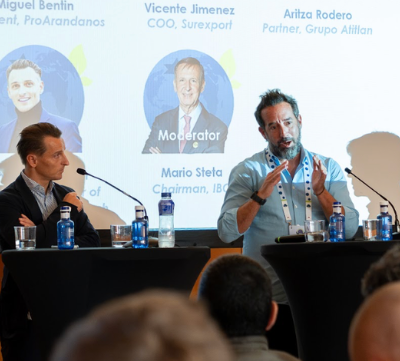
Mario Steta’s agenda does not stop after his time in the Caucasus. As has been done by other Board members which have recently presented IBO’s work and strategies at events in Morocco, Portugal and Colombia in the coming weeks, he will continue his agricultural diplomacy work by traveling to Spain to participate in the Freshuelva Berry Congress and the National Agriculture Fair in Portugal, events where the “Georgian success case” and the changing market dynamics of the Mediterranean and Eurasian basin will form an inescapable part of the technical debates.
Ultimately, Georgia has shown the world that small industries can develop and compete when having the right vision and ambition. Sustained by Georgia’s citizens unique warm and welcoming attitude, its recipe combines a generous geography, water availability, access to labor, a surprising speed of technological adoption, and, above all, a human fabric based on commitment, radical collaboration and absolute transparency. The blueberry of the Caucasus is here to stay and claim, by its own right, its place at the forefront of global fruit growing.
IBO exclusive