

US Supreme Court strikes down Trump’s emergency tariffs
- . February 2026
This is a developing story | LAST UPDATE: Friday, February 20, at 12:19 pm EST.
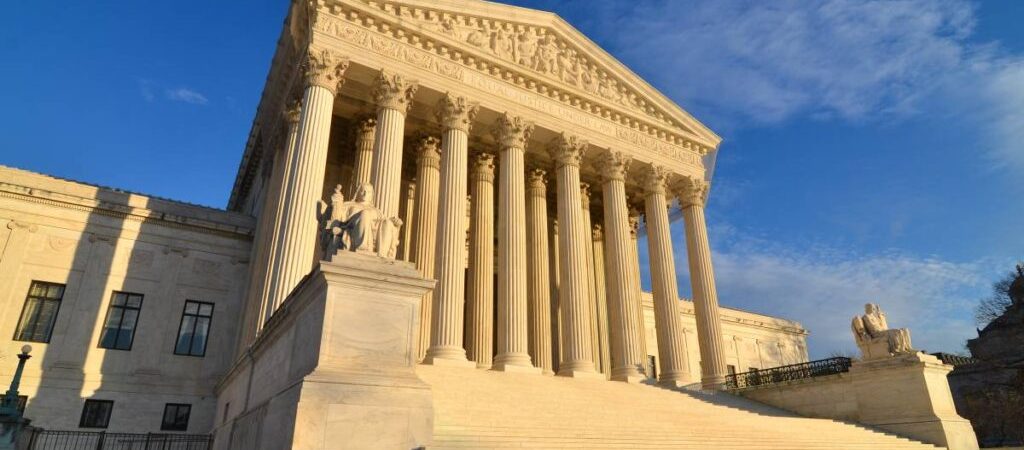
In a 6-to-3 decision, the US Supreme Court ruled that the 1977 International Emergency Economic Powers Act (IEEPA) doesn’t authorize President Donald Trump to impose tariffs. The ruling effectively strikes down levies imposed by the Trump Administration on multiple countries around the world, a move that, according to SCOTUS, was done unlawfully, reported Law 360.
In the court opinion, Chief Justice John Roberts writes that the court argued that the US Constitution grants Congress the power to impose taxes and levies, but the Executive branch doesn’t enjoy the same power.
The president “asserts the independent power to impose tariffs on imports from any country, of any product, at any rate, for any amount of time. Those words cannot bear such weight,” reads the decision. Additionally, the justice writes that if Congress had intended IEEPA to bestow on the president “the distinct and extraordinary power to impose tariffs, it would have done so expressly—as it consistently has in other tariff statutes.”
Joining Chief Justice Roberts in the dissent were Trump-appointed conservative Justices Neil Gorsuch and Amy Coney Barrett, along with liberal justices Sonia Sotomayor, Elena Kagan, and Ketanji Brown Jackson.
President Trump received the news of the Supreme Court decision during a meeting with US governors in the White House. There, he shared his first reaction, calling the ruling “disgraceful.”
Right after the decision was released, Reuters reported that US stock indexes rose to a two-week high, while the dollar weakened.
Multiple industries worldwide have been bracing for the SCOTUS decision, which was supposed to be released in mid-January. What this ruling means in terms of tariff refunds and the trade deals struck by the Trump Administration in the months since Liberation Day is still uncertain.
The ag industry celebrates the Supreme Court decision
The agricultural industry has been hard-hit by the Trump Administration’s retaliatory tariffs since their announcement in April 2025. Levies on products like Brazilian and South African citrus have jeopardized entire sectors and threatened the economies of entire countries, which is why the SCOTUS decision was well received by the fresh produce community.
“IFPA welcomes the Supreme Court’s decision clarifying the limits of IEEPA and reaffirming that broad, country-specific tariffs fall outside its intended scope. The global trade of fresh produce is essential to the health and well-being of people in every nation, and today’s ruling helps restore predictability to a uniquely complex, seasonally driven marketplace,” said the International Fresh Produce Association in a statement.
The organization said it hopes the decision allows policymakers to move beyond broad tariff actions and “continue working toward lower trade barriers that ensure affordable access to fresh produce and floral products.”
In Latin America, Richard Salazar, CEO of the Ecuadorian Association for Banana Export and Commercialization (ACORBANEC), emphasized that his industry remains respectful of US sovereignty and will comply with the country’s trade rules.
“If unlawfulness has been declared, it’s the country’s internal problem,” he told FreshFruitPortal.com. “Those are sovereign decisions, and fruit importers will have to take adequate measures according to them.”
Meanwhile, Víctor Catán, President of the Chilean National Federation of Fruit Producers (Fedefruta), joined in on celebrations of the US court decision.
“We think the ruling is healthy and brings back justice and trust to business, especially one like fruit export and production, which requires a lot of trust between producers and the American consumers.”
02-20-2026
Source: Freshfruitportal.com