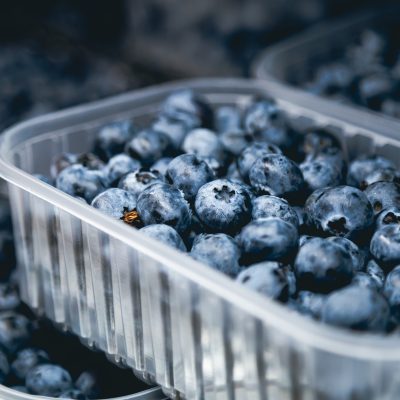



Faced with steep US import duties, growers in Chile, Peru and Morocco prepare a response
- . August 2026
Blueberry growers in Chile, Peru and Morocco are formulating a series of countermeasures to tackle swingeing US import tariffs on their products.
Last month, the Office of the United States Trade Representative (USTR) announced it was slapping import duties of up to 12.5% on a broad swathe of goods from 60 different countries. Citing Section 301 (b) of the Trade Act of 1974, the USTR asserted that the states in question had failed to take steps against the use of forced labor in producing goods for export, undermining U.S. firms on price. The restrictions, USTR said, would ensure that trading partners “correct what is both a human rights abuse and distortive trade practice.”
While blueberry exporters in Canada and Mexico have avoided tariffs thanks to their existing free trade agreements with the US, Chile, Peru and Morocco have been harder hit. All three must grapple with the maximum 12.5% rate.
From the defensive…
Growers in all three markets have decried the curbs. Miguel Bentín, President of Peru’s leading industry association, ProArándanos, said the duties distort “a commercial relationship which has shown itself to be complementary and value-generative for both parties.”
Andrés Armstrong, executive director of the Chilean Blueberry Committee, warned that the barriers reversed a long-term trend towards liberalized access to the U.S. Meanwhile, in Morocco, there is “an additional layer of uncertainty for exporters serving the U.S. market,” pushing up prices and reducing competitiveness, Greg Murdoch, managing director of locally-based grower, African Blue, said.
….to the charm offensive
Having recovered from their initial shock, growers in all three countries are now pursuing a triple-track response: highlighting a shared interest with the US in maintaining year-round supply; coordinating with governments and with each other to reverse the punitive tariffs; and cracking new export markets.
Both Armstrong and Bentín, emphasized that, paradoxically, the protectionist measures are likely to hit US demand – and with it, the entire U.S. blueberry sector. Rather than competing with domestic production, the Southern Cone’s export season complements that of the U.S., peaking during the North American winter and guaranteeing year-round supply for retailers and consumers, they said.
Moreover, raising blueberry prices clashes with the US government’s much-trumpeted drive to boost fresh fruit consumption. “This particularly contradicts the administration’s own stated healthcare goal, in which fruit consumption – especially of blueberries – plays a very important role,” Armstrong argued. The 2025-2030 edition of Dietary Guidelines for Americans, published by the US Department of Health and Human Services and the Department of Agriculture in January, emphasizes the benefits of fresh produce in combating chronic disease.
Promisingly, the North American Blueberry Council (NABC), representing US and Canadian growers, has also warned against blocking trade flows. NABC has stated that “consistent retail presence of fresh blueberries is critical to making blueberries a household staple and supports the success of US growers”
Governments and growers get together
At the same time, liberalizing the blueberry trade will depend on government-to-government agreement and political will, Proarándanos’ Bentín said: “From our perspective, the measure is political rather than commercial in nature.” Rather than addressing labor rights in Peru, the U.S. decision demands “that countries enact legislation explicitly banning the import of goods made with forced labor, and that this ban be enforced. As such, it is a matter of national legislation and public policy, not a confrontation with labor practices in the Peruvian blueberry sector.”
Trade bodies in both Chile and Peru, however, plan to support their respective governments during talks with their U.S. counterparts. Proarándanos, Bentín explained, will draw attention to “the concrete benefits this relationship generates for the entire supply chain.”.
No escalation
Both Armstrong and Bentin, however, counselled against retaliatory tariffs. “A generalized tariff, applied to such products as fresh fruit, does not seem to be a desirable mechanism for addressing labor and commercial concerns, especially where there is no direct connection between these concerns and the affected product,” Bentin said.
African Blue’s Murdoch sounded a similarly conciliatory note. Moroccan blueberry growers, he said, will likely continue “working closely with their US customers to ensure they remain competitive,” eschewing escalation.
Investing in exports, creating quality
With the tariff logjam unresolved for now, branching out into new export markets offers the surest route to maintaining the flow of produce, Armstrong, Bentín and Murdoch said.
Having bulked up sales in the E.U., the U.K. and Asia, “Chilean fruit has effectively found alternative destinations,” Armstrong said. “During the most recent local season, spanning 4Q25 and 1Q26, Chilean blueberry exports rose 3% over the same period in 2024 – 2025, even as fresh blueberry exports to the U.S. slid 13%,” he pointed out.
In the same vein, Morocco’s growers are angling to crack “a diverse range of export markets” by touting the premium nature of their berries, Murdoch said.
Meanwhile, Peru’s producers are intensifying an existing drive to turbocharge quality and efficiency, Bentín said. This campaign, while long-standing, has the added benefit of equipping the sector to overcome the current regulatory challenges, he said.
No place like America
Still, geographic diversification is time-consuming and complex, Armstrong noted. Each new export market requires a tailor-made approach that addresses divergent logistics and consumer preferences across different countries, he pointed out.
For this reason, U.S. access remains indispensable, Armstrong emphasized. “Our objective,” he said, “is not to replace it, but to maintain a commercial relationship which has proved beneficial to Chile as well as to American industry and consumers.”
IBO original content