


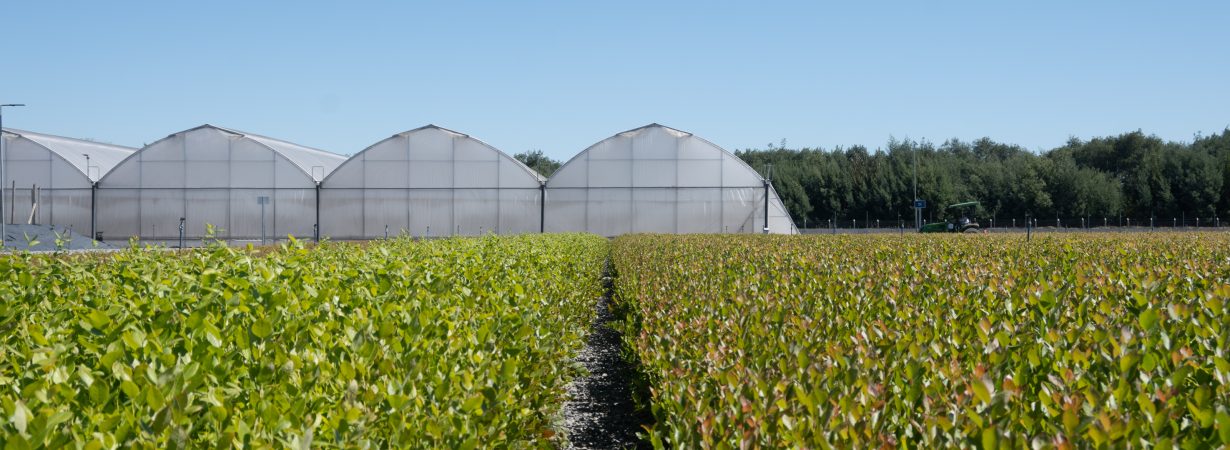
New varieties open expectations for the Chilean blueberry industry
Against a backdrop of renewed optimism in the blueberry industry, Fall Creek® Chile Conecta brought together key stakeholders to officially present new varieties from the Collection and SEKOYA® platforms. These high-chill varieties are positioned to play a pivotal role in Chile’s varietal replacement process.
The event, held at Fall Creek®’s nursery in Chillán, welcomed more than 250 participants, including growers, marketers, industry professionals and related companies. Attendees were introduced to the advantages of the new genetics compared to traditional varieties, with highlights including larger fruit size, extended postharvest life, improved firmness and crunch without compromising flavor, and higher yields, attributes widely recognized as critical by industry stakeholders.
José Tomás Gallo, Commercial Manager of Fall Creek® Chile, underscored the significance of the moment for the industry. “We are in a highly relevant position for varietal renewal in Chile. After three years working with this new genetics, with plantings established in 2020 and 2021, we now have a clear understanding of the varieties we are promoting. Grower interest has been strong, with a significant number of hectares planted in recent years and steady growth gaining momentum,” he said.
The program also included presentations on the commercial platforms, an analysis of Chile’s position in the global market, and a review of evaluation results from new genetics developed over the past four years by researchers at the Agricultural Research Institute (INIA).
Bruno Defilippi, researcher at INIA La Platina, highlighted the role of innovation in shaping the future of the sector. “Over the past four years, we have seen how the incorporation of new materials and genetics allows us to move forward with varieties that deliver improved quality, particularly in firmness and flavor. Achieving this is not straightforward when compared to fruit from competing or complementary origins such as Peru,” he noted.
In the same vein, Andrés Armstrong, Executive Director of the Blueberry Committee of Frutas de Chile, emphasized the importance of adaptation. “Chile remains a key player in the global blueberry industry, and we are currently undergoing a process of adjustment to increasing international competition, where varietal renewal is essential,” he said.
“There is already a global shift in genetics that is supporting continued growth in this crop, with demand expanding into new consumption segments. This is largely driven by new genetics that enable a differentiated product offering,” Armstrong added.
Ernesto Pino, General Manager of Fall Creek® Chile, pointed to the opportunity for Chile to maintain its relevance in the global blueberry market. He highlighted the role of new genetics in leveraging commercialization windows, opening new markets, and positioning Peru more as a complement than a direct competitor.
While noting that approximately 3,500 hectares of new varieties have been planted, Pino acknowledged that the renewal process still needs to accelerate. “Chile has around 15,000 hectares planted, of which 10,000 require replacement,” he stated.
Pino also positively assessed the event, emphasizing both the strong attendance and the diversity of participants, from growers to international importers. “After four years of observation and commercial trials, we had a substantial amount of information to share,” he said.
“These varieties combine strong postharvest performance and firmness with a distinctive flavor profile, enabling them to compete with tropical and subtropical origins, which often deliver firmness but less flavor,” he concluded.
Expectations
For the industry, varietal renewal is seen as the only path forward. This new genetics is viewed as a response to increasingly demanding market requirements, while demand continues to grow and significant opportunities for expansion remain.
Juan Marchant, Field Manager at Prize, highlighted key attributes of the new varieties: “Fruit quality in terms of firmness and size stands out, as well as plant vigor and rapid establishment in the field, which allows for better management and earlier production. We currently have three SEKOYA® varieties — Crunch, Grande and Fiesta — which have adapted well and delivered strong results this season.”
José Monasterio, Quality and Postharvest Manager at exporter Frusan, added: “The work Fall Creek® is doing with new genetics is highly relevant, as it aligns with current market demands. New genetics translates into better firmness, improved flavor and longer postharvest life. Markets are increasingly demanding — they expect large, flavorful, firm fruit that travels well and delivers a strong consumer experience.”
03-19-2026
Source: Portalfruticola.com