

USHBC President on Mexico’s role in the North American blueberry industry: “We can’t do it by ourselves”
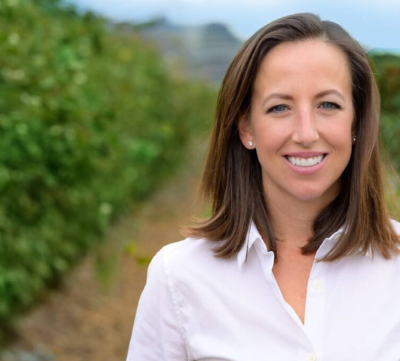
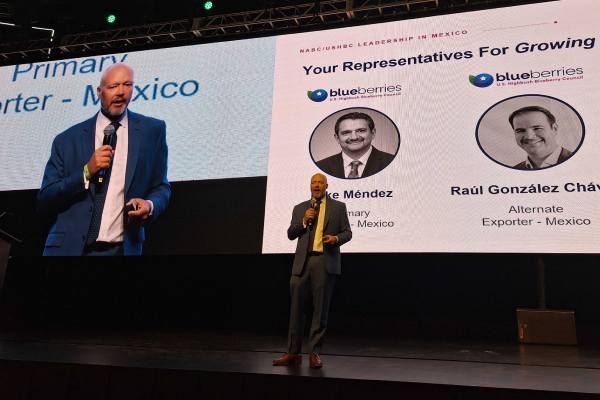
During the 16th edition of the Aneberries Congress, held last week in Guadalajara, Mexico, Kasey Cronquist, leader of the US Highbush Blueberry Council (USHBC), took center stage to analyze the challenges and opportunities facing the regional blueberry industry.
In his brief presentation, the executive celebrated the marketing and promotional efforts undertaken by the USHBC since its creation 26 years ago. Cronquist emphasized how his organization’s essential mission—expanding demand for US blueberries across markets—has not changed since 2000.
However, challenges and opportunities have shifted dramatically for a gravity-defying industry that continues to see rising value even as volume and tonnage increase.
“Americans want more blueberries,” he said. “We can see it in the data, and not only has this doubled two and a half times since 2011—we expect it to double again in 10 years.”
Making blueberries an afternoon delight
Demand for blueberries keeps growing worldwide, but Cronquist says category growth should not center around volume only, as there’s still a lot of room for expansion.
According to USHBC data, one in two US households have purchased blueberries at least once in the past year, meaning there’s still half of the market left untapped. Moreover, Cronquist explained that, among the 50 percent of American households that buy blueberries, only 20 percent account for 60 percent of the dollars spent.
“That’s a small population of people in the United States that are funding and supporting and buying blueberries,” he said. “That is both a problem and an opportunity: We need to expand that audience of consumption so that we get into that 80 percent that’s still representing 40 percent of the value and target them.”
For that, Cronquist explained the USHBC is investing in multiple marketing approaches, including a solid presence of displays and promotional materials at the point of sale, continued work with influencers and social media, TV ads, and even a partnership with People Magazine. The latter, the executive explained, put blueberries in the publication’s yearly best-selling Sexiest Man Alive issue, making the fruit the Sexiest Food Alive.
“It might have made you a little uncomfortable, but that’s okay,” he said. “This is the kind of work that needs to be done in order to rethink what we’re trying to do to get more people to come to the category.”
Additionally, the market expansion challenge lies in creating more opportunities for blueberry consumption. According to Cronquist, the fruit is a morning staple in American households, present in classics like pancakes, muffins, smoothies, and yogurt parfaits.
“And then afternoon consumption falls off. So there’s a problem and an opportunity that we are excited to solve: We’ve got to get beyond breakfast,” he stated.
The executive praised the work of Avocados from Mexico, saying the pivot the industry body made in positioning the fruit not only as a brunch and breakfast food but also as a party and game-day essential is what blueberries need to aspire to.
Mexico: An essential piece in the North American blueberry puzzle
In light of the recent USTR announcement retiring the United States from the US-Mexico-Canada Trade Agreement (USMCA), the blueberry industry leader emphasized the important role the Aztec country plays in the North American berry landscape.
Through a series of charts, Cronquist explained that Mexican fruit enters the US at a critical time when local production is low. This, he said, has allowed the industry to complement domestic production with imports from across the border, providing the American market with year-round supply and keeping demand stable.

“We can’t do it by ourselves. And so we’ve built relationships with other countries, through other marketers, to ensure that we can continue to grow this category,” the executive added.
Having participated in a trade mission to Mexico City along with US Secretary of Agriculture Brooke Rollins and Undersecretary Luke Lindberg, Cronquist said the USHBC is in direct contact with the Trump Administration and the US Trade Representative’s Office. He said his organization has shared with the authorities its data and insights on the importance of Mexican blueberry imports, which account for nearly a third of the $9.1 billion industry impact on the US economy each year.
“The government needs to understand how interdependent this category is on imports with the domestic supply,” he said. “We really do count on our foreign governments to get together and try to negotiate those things to ensure that we’re maintaining a fair marketplace.
Additional reporting by Macarena Bravo, from Guadalajara, Mexico.
Source: Freshfruitportal.com