

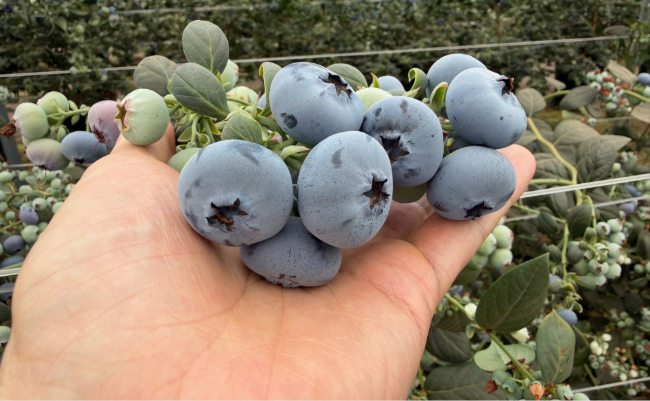
Oregon’s OBG-Raptor may redefine perceptions of Rabbiteye blueberry varieties
Oregon Blueberry, a commercial nursery and genetics company, has unveiled its latest creation: the OBG-Raptor. The Rabbiteye hybrid cultivar, they say, will shatter the old reputation of the variety as gritty and bland.
After years of cross-breeding, the OBG-Raptor provides a better consumption experience, with a firmer feel and a more flavorful fruit, as well as significant agronomic advantages.
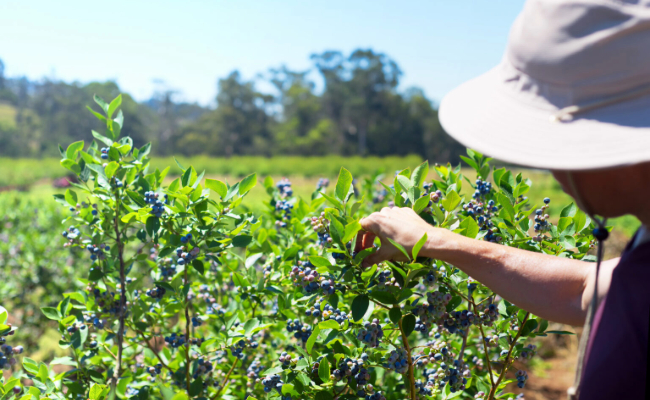
Meet Oregon Blueberry’s high-yielding OBG-Raptor
Jonathan Horton, Director of Genetics at Oregon Blueberry, told FreshFruitPortal.com that the current Rabbiteye crop has traditionally left much to be desired in terms of flavor and texture.
However, on the producer’s side, Rabbiteyes have significant strengths, including vigor, impressive yields, and drought resistance.
“If you could control the size of the plant and get a good berry with firmness, without the seeds, then it’s just a moneymaker—it’s a workhorse,” Horton said.
This was the challenge for Oregon Blueberry’s breeders, who set out to instill all the positive aspects of Rabbiteyes into a single cultivar.
In field trials, seven-year-old OBG-Raptor plants produced up to 35 pounds of large berries, averaging an 18.2 millimeter caliber. By comparison, mature blueberry plants typically yield five to 20 pounds annually, while healthy Rabbiteyes can produce up to 25 pounds a year.
OBG-Raptor berries are firmer and have a very low seed count, resulting in a smoother texture and strong commercial value.
“It’s not gritty, it’s not mushy, it has good size, can be machine harvested, and offers qualities we believe will appeal to growers and meet consumer standards,” he adds.
Horton believes now is the ideal time to introduce the OBG-Raptor, as farmers are facing rising production costs.
“The economics of blueberry production are tighter today than in the past,” he explained. “When you tell a grower they can machine harvest 35 pounds per plant, compared to the usual 14 to 22 pounds, it represents a significant improvement, though results may vary by region and grower.”
Potential without fertilization producer
The team at Oregon Blueberry is also evaluating OBG-Raptor’s potential as a parthenocarpic blueberry, meaning the plant doesn’t require the help of a pollinator to produce fruit.
“Our initial observations are that when we’ve covered them to keep bees out, it still generates fruit, and there’s not a noticeable decline in yield,” Horton added.
This is an uncommon trait in blueberries, and while the expert notes that last year’s tests supported these findings, this summer’s trials will be critical to confirming the team’s hypothesis.
03-27-2026
Source: Freshfruitportal.com